Lot 147
Auction date
01-07-2026 11:00 CET
Finalized
Starting price: 12.000 €
SOLD BY: 21.000 €
ROMAN EMPIRE
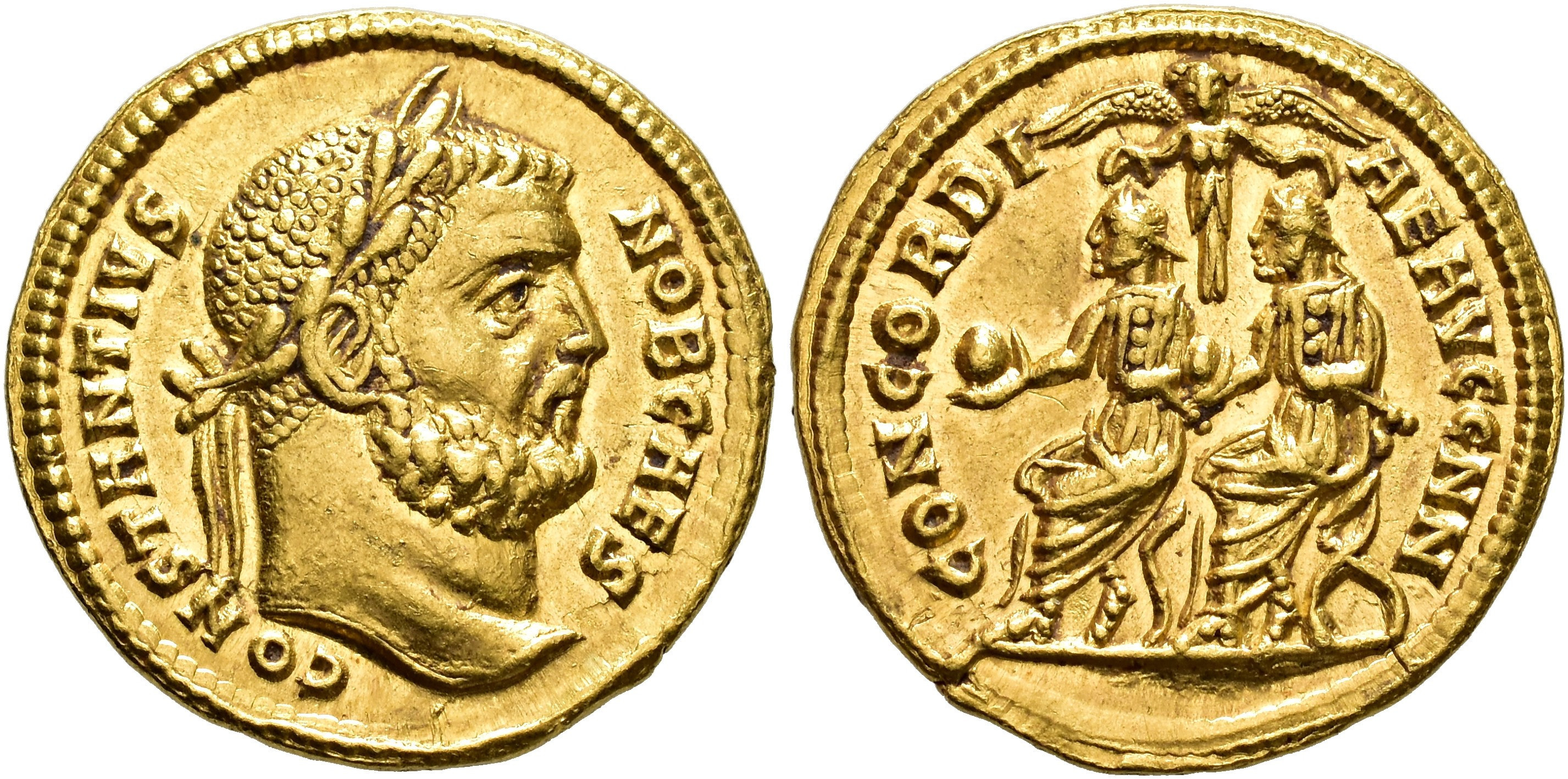
ROMAN EMPIRE. CONSTANTIUS I (293-306). Aureus. Cyzicus? (299-302). Laureate head right; CONSTANTIVS NOB CAES. Rev. Diocletian and Maximian seated left, togate, each holding globe and scepter; above them, Victory facing, crowning them; CONCORDIAE AVGG NN. AU 5. 22 g. 19. 3 mm. RIC-unlisted; Cal.-4815, same specimen. Remains of original luster. XF-/XF. Rare.
Categories
NumismáticaThis coin illustrates the system of the Tetrarchy established by Diocletian, which in theory comprised two Augusti and two Caesars, with four almost independent centres of power and assigned territories. Diocletian decided to associate Maximian with the throne (286), reserving for himself the government of the eastern provinces, with Nicomedia as capital, while his colleague governed the West from Milan. In 293 they decided to appoint heirs (Caesars) and to share their power: Diocletian appointed Galerius, and Maximian appointed Constantius Chlorus. Both Caesars were to receive provinces of their own to govern, thus giving definitive form to the Tetrarchy. The two Augusti abdicated in 305 and were succeeded by their heirs. Constantius was adopted as a son by Maximian and governed Gaul as his heir between 293 and 305. The obverse shows his portrait, name and rank; on the reverse, the Augusti appear seated on their thrones beneath the wings of Victory, expressing their joint government in Concordia - an extremely rare representation.
Recomended lots
Confirm your maximum bid
You are bidding for €
At the time of auction we will contact you by phone:
Confirm your maximum bid
You are bidding for
€
Loading…
Conecting with the server
Are you sure you want to buy the lot?
Confirm your maximum bid
You are bidding for
€