Lot 1183
Auction date
02-07-2026 11:00 CET
Finalized
Starting price: 4.000 €
SOLD BY: 8.000 €
FERDINAND VII (1808-1813)
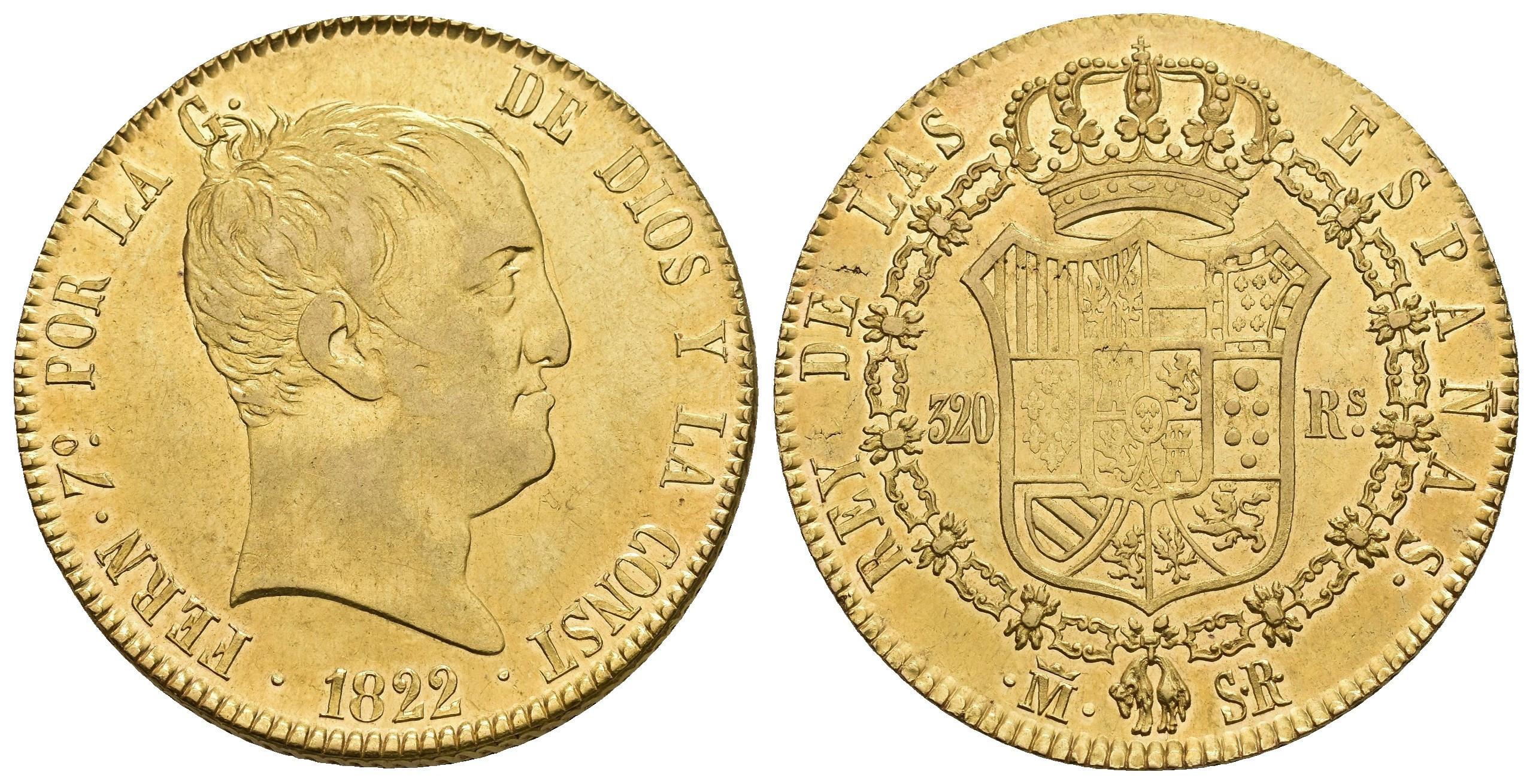
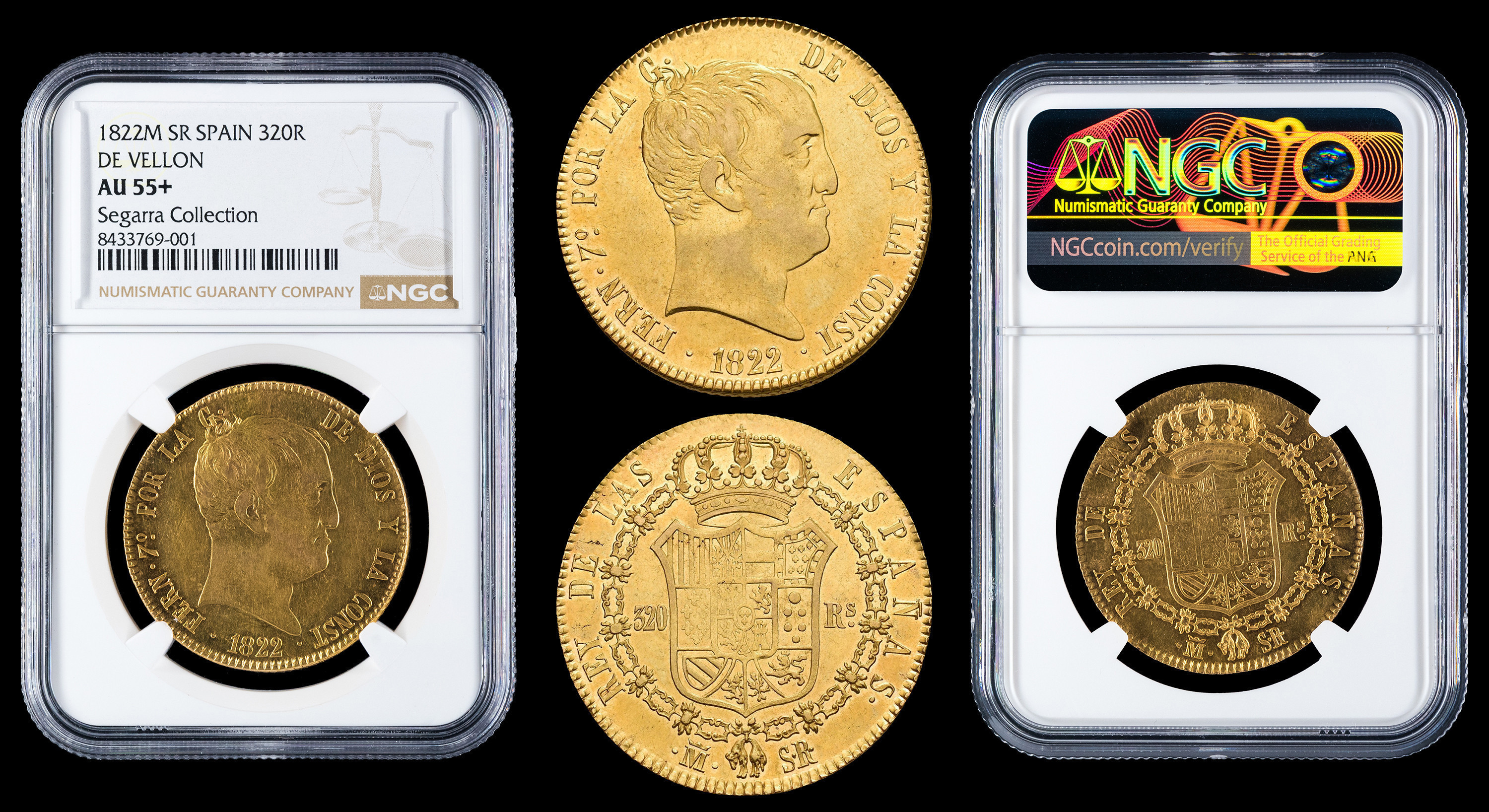
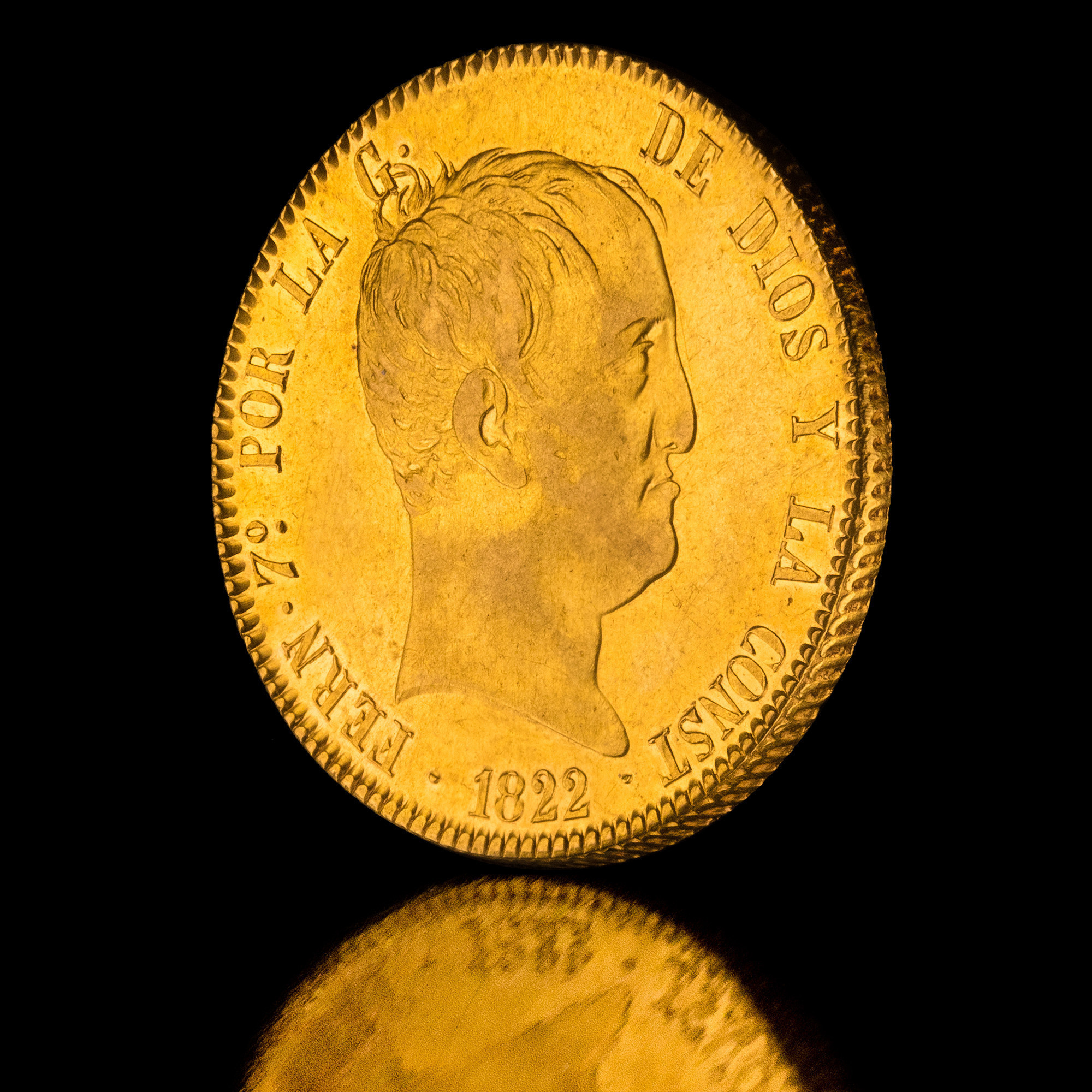
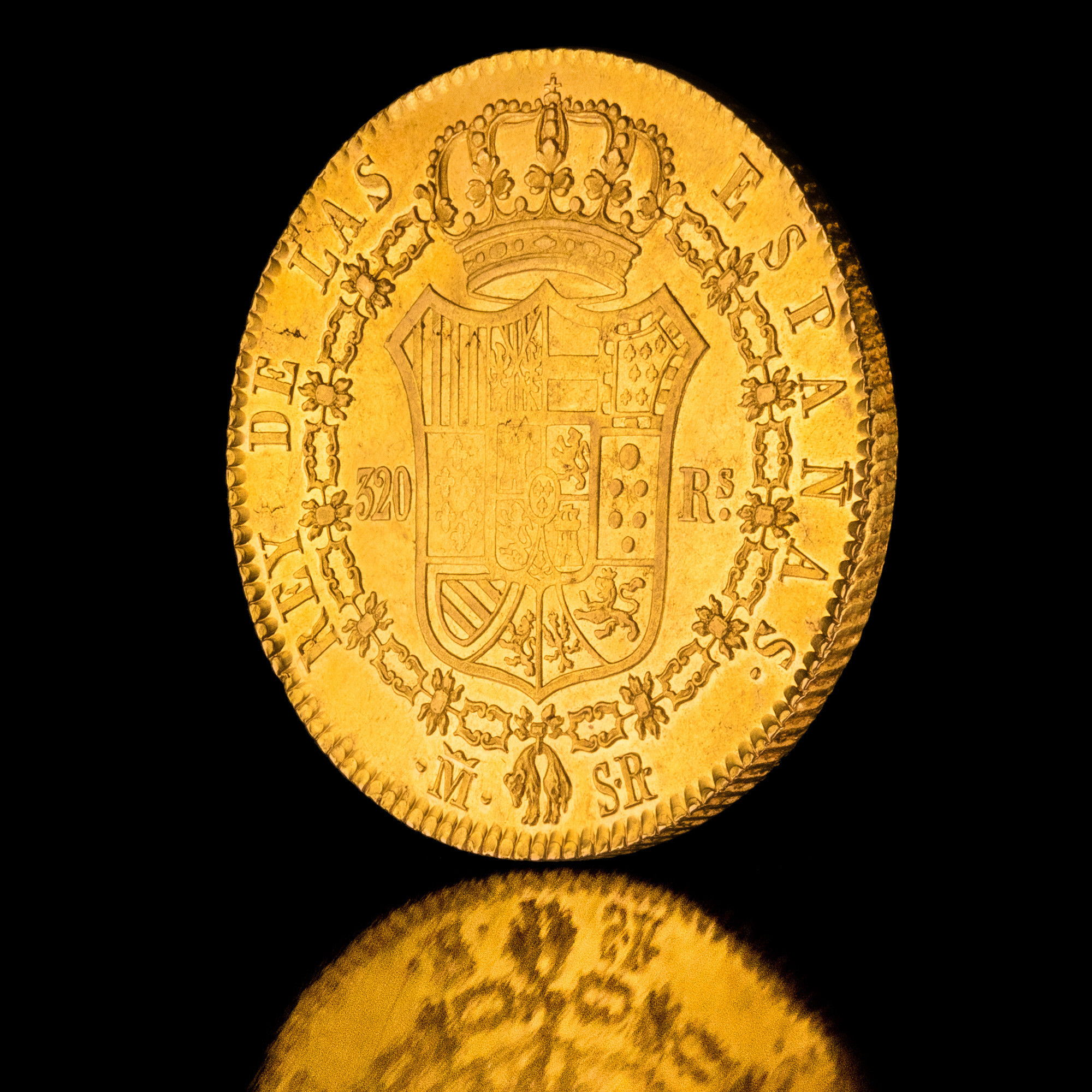
Ferdinand VII. 320 reales. 1822. Madrid. SR. “Cabezón” type. AU 27.05 g. 35.1 mm. AC-1778; Onza-1243; VI-1479. Encapsulated by NGC AU 55+ (8433769-001). Somewhat weak strike on shield. Traces of original mint lustre. Very scarce.
Categories
Numismática320 reales Madrid, 1822 and 1823
After the constitutionalist coup d'etat of 1820, the so-called Liberal Triennium began (March 1820-October 1823), with major repercussions for the coinage. The political importance of the constitutional text led the new government to modify the types and legends of the coinage in order to inform the population of the change in the concept of government and of the king's new role within it. Thus the decree of 1 May 1821 was approved, stating that the Cortes, using the authority granted to them by the Constitution of 1812, had decreed the following:
1. The type of the coinage shall be uniform in the Peninsula and overseas territories for national gold and silver.
2. The obverse of every class of coin shall bear the royal bust of His Majesty without laurel, as used on the coinage of the Peninsula in earlier reigns, and likewise without drapery or any other object that might alter the character of the original.
3. The motto shall be: Ferdinand VII, by the Grace of God and the Constitution, King of the Spains.
4. The reverse of the gold shall remain as before; that of the national silver of the Peninsula shall be made uniform with that currently used overseas, for which purpose the columns seen there shall be added.
8. The value of each coin shall be expressed on it in Arabic numerals (that is, in reales de vellon), in the same manner as the year.
9. The mint at which the coinage is struck shall be distinguished by the mark established until now.
10. As being less ambiguous, the initial of the assayers' surname shall be substituted for that of their given name, and new edge designs, less susceptible to counterfeiting or clipping, shall be adopted for gold, silver and copper.
These changes were intended to counterbalance the traditional absolute power of the king, legitimized by divinity, with the new power of popular sovereignty. The king's right to reign was recognized, but the exercise of government was to be limited by the Constitution, approved by national sovereignty. For this reason the legend of the new coins reflects that duality: the king is king by the Grace of God, but government is exercised under the Constitution. Latin was also abandoned in the legends and replaced by Spanish, the general language of the Nation.
Together with the legends, the king was "humanized": the laurel of victory, which belonged more to the people than to the monarch, was removed, and the portrait was updated to show the reality of the person rather than the idealized glory of the institution. In these new pieces the king therefore appears closer and with his imperfections revealed. The portrait was the work of Felix Sagau y Dalmau. The type was struck only in Madrid in 1822 and 1823 and became known as the cabezon, or "large head", because of the great size of the king's head in relation to earlier pieces. Its assayers were Jose Sanchez Delgado and Isidoro Ramos del Manzano (SR).
Recomended lots
Confirm your maximum bid
You are bidding for €
At the time of auction we will contact you by phone:
Confirm your maximum bid
You are bidding for
€
Loading…
Conecting with the server
Are you sure you want to buy the lot?
Confirm your maximum bid
You are bidding for
€